Police Action on Police
Brutality

The ENDSARS Data Portal aims to provide a single interface to get an overview of the state of
governments commitments at the state and federal level to addressing the demands of the ENDSARS protesters in ways that shows progress,
lessons, and best practices.
Actions taken by government to quell the ENDSARS protests have had profoundly negative impacts on civic space. State institutions have used their
disproportionate power over citizens to unlawfully arrest, shoot, harass, beat, freeze accounts, deny travel or renewal of international passports.
These decisions have a knock-on impact on citizens engagement in public policy.
In October 2020, Federal and State Government in response to the demands of the protesters set up a judicial panel of inquiry to investigate allegations
of police brutality and extrajudicial killings—an initial first step to an ambitious and comprehensive step to addressing issues of rights abuses across
the country.
Monitoring progress on governments commitment to the ENDSARS demands requires both quantitative and qualitative data, including going beyond the
face value of commitments and policy statements by providing empirical assessments of the experience of citizens in assessing progress on issues
of police brutality and by extension improved civic space—a commitment the Nigerian Government made in its 2nd National Action within the Open
Government Partnership.
The Nigeria Network of NGOs has developed this tracker to provide stakeholders with the necessary information they ned to feed into an inclusive and
participatory engagement processes for monitoring progress and government commitments over time. The dashboard provides an overview of progress and
state of commitment across the 36 States of the Federation including Abuja. We are tracking and publishing the commitments made by our leaders, the
ongoing demands from the protesters, and lessons.
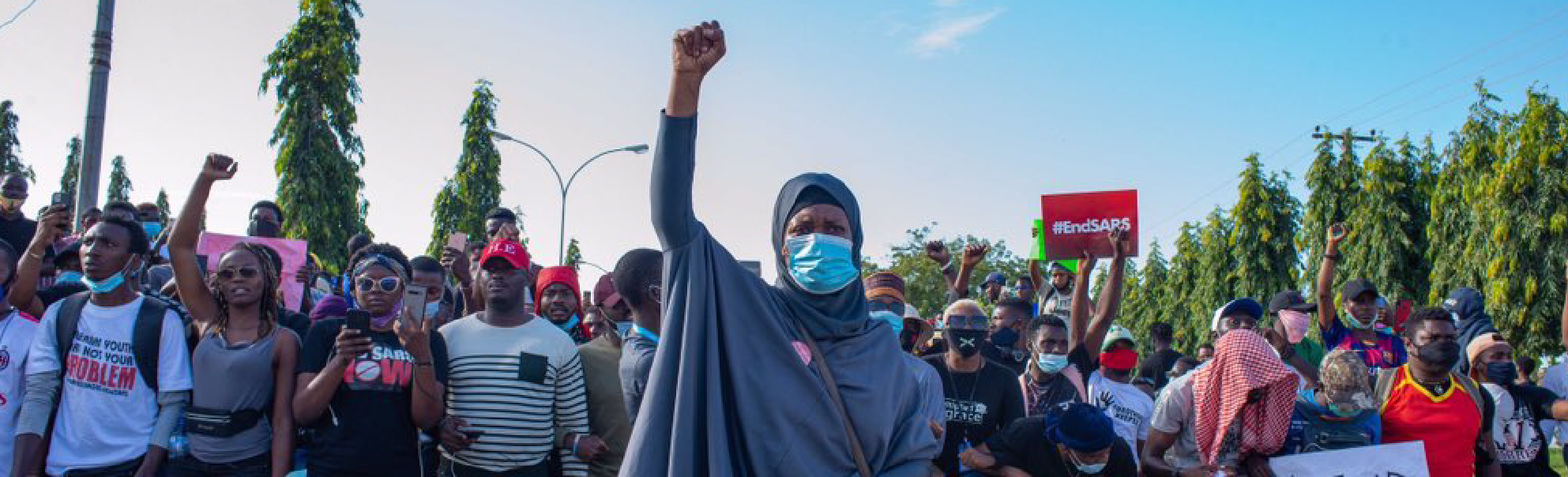
The #EndSARS protests across major cities of the country was revived in early October after a video emerged of police officers thought to be members
of the SARS unity, allegedly killing an unarmed young man. The protesters are demanding change and the total disbandment of a police unit called the
Special Anti-Robbery Squad (SARS) widely accused of unlawful arrests, torture and murder.
SARS was one of a number of special police forces set up in the 1990s to address rising violent crime, yet many in the country have accused the unit
of gradually mirroring the groups they were set up to stop.
This recent uprising is not the first attempt calling for reforms of this unit. The #EndSARS movement dates back to 2015, where Nigerian youths used
the hashtag to share their experiences on violence and assault perpetrated by the defunct Special Anti-Robbery Squad. Previous attempts have been made
dating back to 2015 to address the rampant violence and criminal activities carried out by this unit.
Our ENDSARS Action Tracker captures information on the ENDSARS protests, government commitment and action through research using several evidence-based sources ranging from news articles published by reputable news organisations, governments social media handles and that of citizens organisations. This live tracker is updated on an ongoing basis as we receive further information. News or information sources are included and linked directly for validity of information. Please note, the information on this tracker is primarily based on information sources directly from public statements made on government websites, social media handles and news articles from reputable organisations and have not been verified.
Actions taken by government to quell the ENDSARS protests have had profoundly negative impacts on
civic space. State institutions have used their disproportionate power over citizens to unlawfully arrest, shoot, harass, beat, freeze accounts,
deny travel or renewal of international passports. These decisions have a knock-on impact on citizens engagement in public policy.
In October 2020, Federal and State Government in response to the demands of the protesters set up a judicial panel of inquiry to investigate
allegations of police brutality and extrajudicial killings—an initial first step to an ambitious and comprehensive step to addressing issues
of rights abuses across the country.
Monitoring progress on governments commitment to the ENDSARS demands requires both quantitative and qualitative data, including going beyond the
face value of commitments and policy statements by providing empirical assessments of the experience of citizens in assessing progress on issues
of police brutality and by extension improved civic space—a commitment the Nigerian Government made in its 2nd National Action within the Open
Government Partnership.
The Nigeria Network of NGOs has developed this tracker to provide stakeholders with the necessary information they ned to feed into an inclusive
and participatory engagement processes for monitoring progress and government commitments over time. The dashboard provides an overview of progress
and state of commitment across the 36 States of the Federation including Abuja. We are tracking and publishing the commitments made by our leaders,
the ongoing demands from the protesters, and lessons.
This is a live tracker updated on an ongoing basis. Since we only share the most current information available, we agree it is possible to also miss out on details, should you have more current information, please contact us at nnngo@nnngo.org with the subject line ‘ENDSARS Action Tracker’.
What are states doing to address the ENDSARS demands? How did states respond to the protests? How are states helping citizens to claim their voice and address policy brutality? This State Policy Tracker helps you to navigate the national response.